
Case Study
East Grampians Rural Pipeline (EGRP)
Delivering an Integrated Digital Engineering Ecosystem for Mixed-Fleet Infrastructure Construction
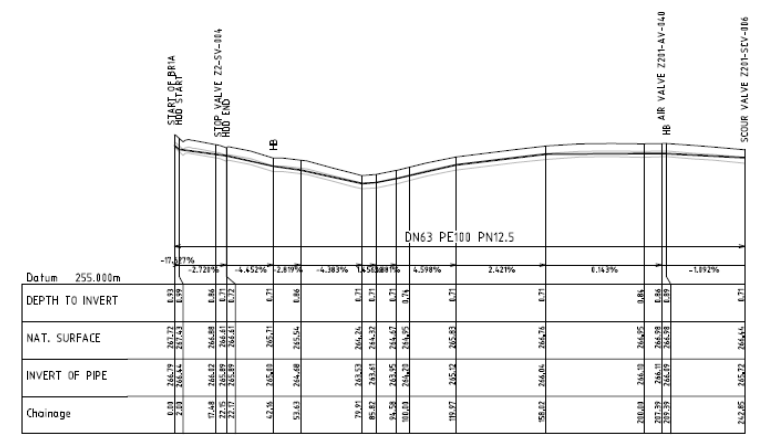
Pipeline Long-section View
Introduction
The East Grampians Rural Pipeline (EGRP) project presented an opportunity to redefine how machine control, engineering workflows, and field execution operate together within modern infrastructure delivery.
In collaboration with Mitchell Water, we moved beyond traditional technology deployment models to design and implement a fully integrated digital engineering ecosystem — combining bespoke hardware engineering, custom-developed software platforms, data synchronisation, and satellite-enabled connectivity.
The goal was not simply to introduce new tools, but to fundamentally improve how information flows between office and field environments, enabling construction operations to function as part of a unified digital system.
Following approximately 1.5 years of continuous operation, the deployed architecture has proven its reliability, scalability, and operational value across a complex mixed fleet environment.
Industry Challenge
Infrastructure projects increasingly require precision, agility, and real-time collaboration across geographically distributed teams. However, many projects still rely on fragmented technology stacks:
· Machine control systems operating independently from engineering workflows
· Manual transfer of design and as-built data
· Limited connectivity restricting real-time collaboration
· Mixed fleets creating inconsistent operational environments
These limitations introduce inefficiencies, increase risk, and prevent teams from fully leveraging digital engineering methodologies.
The EGRP project required a different approach — one that treated machine control, connectivity, and data workflows as a single integrated ecosystem.
Strategic Engineering Approach
1. Platform-Level Systems Architecture
Rather than deploying isolated technologies, a platform-level architecture was developed to unify:
· Machine guidance and positioning systems
· Engineering design workflows
· As-built data capture and validation
· Remote connectivity and support
This approach ensured operational workflows drove technology design — not the reverse.
Bespoke Hardware & Software Development
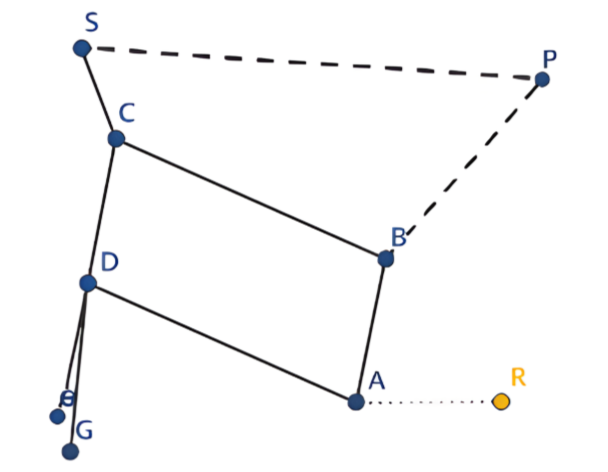
Kinematic design for remote elevation calculation of high vibration implement.
Standard solutions were insufficient for the operational requirements of EGRP.
Key engineering outcomes included:
· Custom-built hardware integrations supporting diverse machine configurations and intricate hydraulic systems
· Bespoke software solutions aligned with real-world field processes
· Cross-platform compatibility enabling consistent workflows across mixed fleet equipment
· Advanced positioning integration designed for long-term operational reliability
· Cutting edge GNSS systems optimised for long baseline RTK
By engineering solutions specifically for the project environment, the system achieved flexibility without sacrificing consistency.
Continuous Office-to-Field Digital Workflow
A primary objective was establishing a continuous feedback loop between engineering teams and field operations.
The implemented framework enabled:
· Direct deployment of updated designs to machines in the field
· Real-time synchronisation of project data using OneDrive
· Return of as-built information for validation and analysis
· Significant reduction in manual file handling
This transformed the field environment into an extension of the digital engineering workspace.
Starlink Connectivity as Operational Infrastructure
Reliable connectivity was critical to achieving real-time workflows.
Starlink satellite infrastructure was deployed to provide:
· High-bandwidth connectivity across remote project areas
· Continuous cloud-based data synchronisation
· Remote diagnostics, support, and system updates
· Reduced downtime caused by connectivity limitations
Connectivity was treated not as an accessory, but as core project infrastructure.
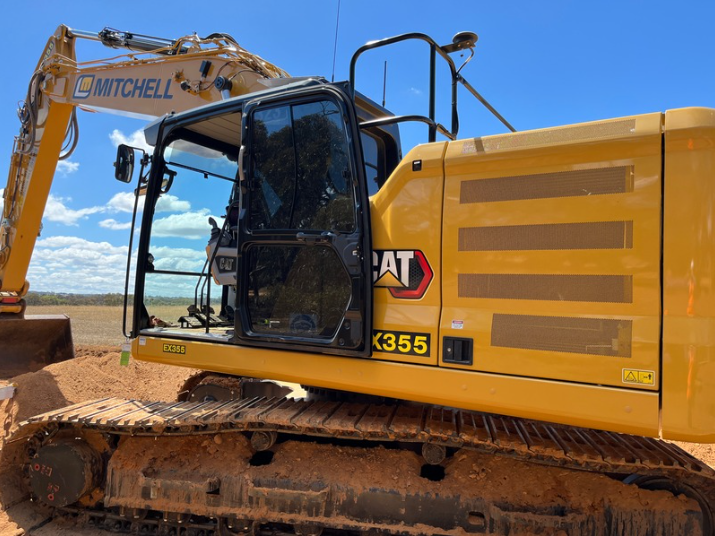
New Caterpillar excavator equipped with Guidemate X-Track System
Operational Outcomes
After approximately 16 months of live operation, the integrated ecosystem has demonstrated:
· Enhanced workflow efficiency through automation and data integration
· Improved confidence in machine positioning and execution accuracy
· Faster design iteration cycles between office and field teams
· Reduced operational risk through real-time visibility
· Long-term reliability across diverse equipment platforms
Most importantly, the deployment validated that integrated digital engineering ecosystems can deliver sustained operational benefits when designed holistically.
The East Grampians Rural Pipeline project reflects a broader industry transition toward connected, data-driven infrastructure delivery.
Rather than viewing machine control, connectivity, and engineering software as separate solutions, the future lies in integrated ecosystems that enable continuous collaboration, real-time decision-making, and scalable innovation.
By designing and deploying bespoke systems tailored to real-world operational needs, this project demonstrates how infrastructure technology can evolve beyond traditional constraints — enabling more adaptive, efficient, and intelligent construction environments.
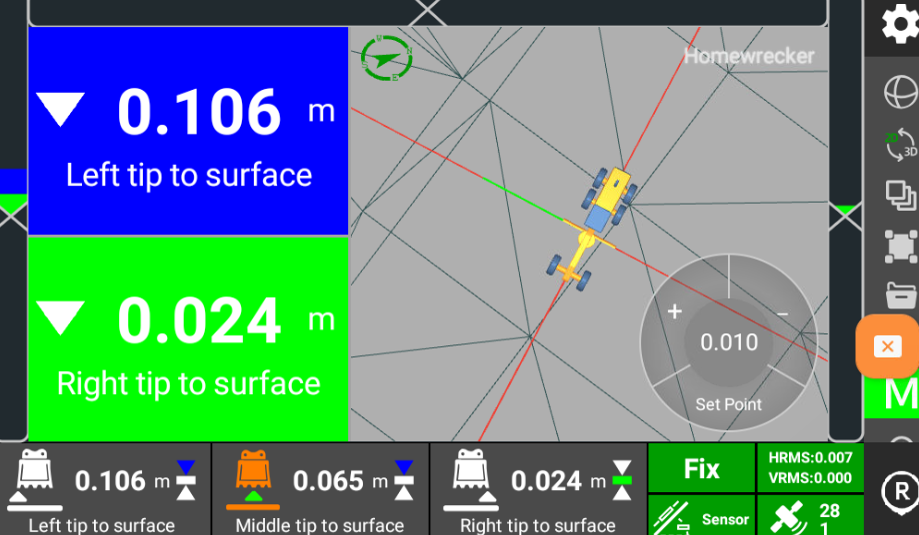
Guidemate G-Track System Interface
Industry Perspective — Advancing Integrated Infrastructure Delivery
The East Grampians Rural Pipeline project highlights a broader evolution within infrastructure delivery, where success increasingly depends on the integration of digital engineering workflows, machine execution systems, and reliable connectivity into a unified operational model.
Rather than viewing machine control as a standalone capability, this project demonstrates the value of treating construction technology as a connected ecosystem where design, execution, and verification operate within a continuous feedback loop.
This approach shifts the role of technology from individual tools toward enabling a cohesive digital environment that supports decision-making, reduces operational friction, and allows projects to adapt in real time.
As infrastructure projects continue to grow in complexity, integrated systems architecture will play an increasingly critical role in bridging the gap between engineering intent and field execution.
The outcomes achieved through the EGRP project reinforce the importance of bespoke engineering and collaborative innovation as key drivers of future-ready infrastructure delivery.
Strategic Outcomes & Measurable Impact
The integrated digital engineering approach implemented on the East Grampians Rural Pipeline project delivered measurable operational and commercial advantages across multiple areas of project delivery.
Capital Efficiency Through Platform Engineering
By designing bespoke integrated solutions aligned with project workflows, system deployment costs were significantly reduced compared to traditional machine control implementations.
· Approximate cost advantage of $20,000 per standard Guidemate (box product) compared to competitors.
· Bespoke solutions were completed at a similar price to our competitors box products. This kind of development is not commonly undertaken by our competitors for single use cases.
· Platform-level integration enabled consistent deployment across a mixed fleet without requiring vendor-specific ecosystems.
This approach allowed investment to focus on operational capability rather than technology overhead.
Workflow Automation & Resource Optimisation
A major operational improvement was achieved through office-to-field and field-to-office data collaboration through common cloud-based data storage.
Traditional workflows required survey personnel to:
· Prepare physical or manual data packages
· Regularly travel to site to deliver updates
· Manage ongoing file handling and version control
· Setup an array of base stations and repeater radios for corrections
Through integrated digital workflows:
· Design updates were available directly from machines
· As-built data was returned to engineering teams daily
· Manual data handling and travel requirements were significantly reduced
This resulted in the effective elimination of routine site visits solely for data transfer, improving efficiency and allowing survey resources to focus on higher-value activities.
Operational Impact Summary
· Reduced capital expenditure per machine
· Lower ongoing operational overhead
· Reduced dependency on manual data workflows
· Improved coordination across multiple crews and equipment types
· Increased responsiveness to design changes
Partnership
We acknowledge the collaboration and forward-thinking approach of Mitchell Water, whose commitment to innovation enabled the successful implementation of this integrated digital engineering model.